Garage Door Hurricane Prep Checklist for Miami Homes
Use this garage door hurricane prep checklist for Miami homes: what to inspect, what to leave to a pro, and what to do before and after a storm.
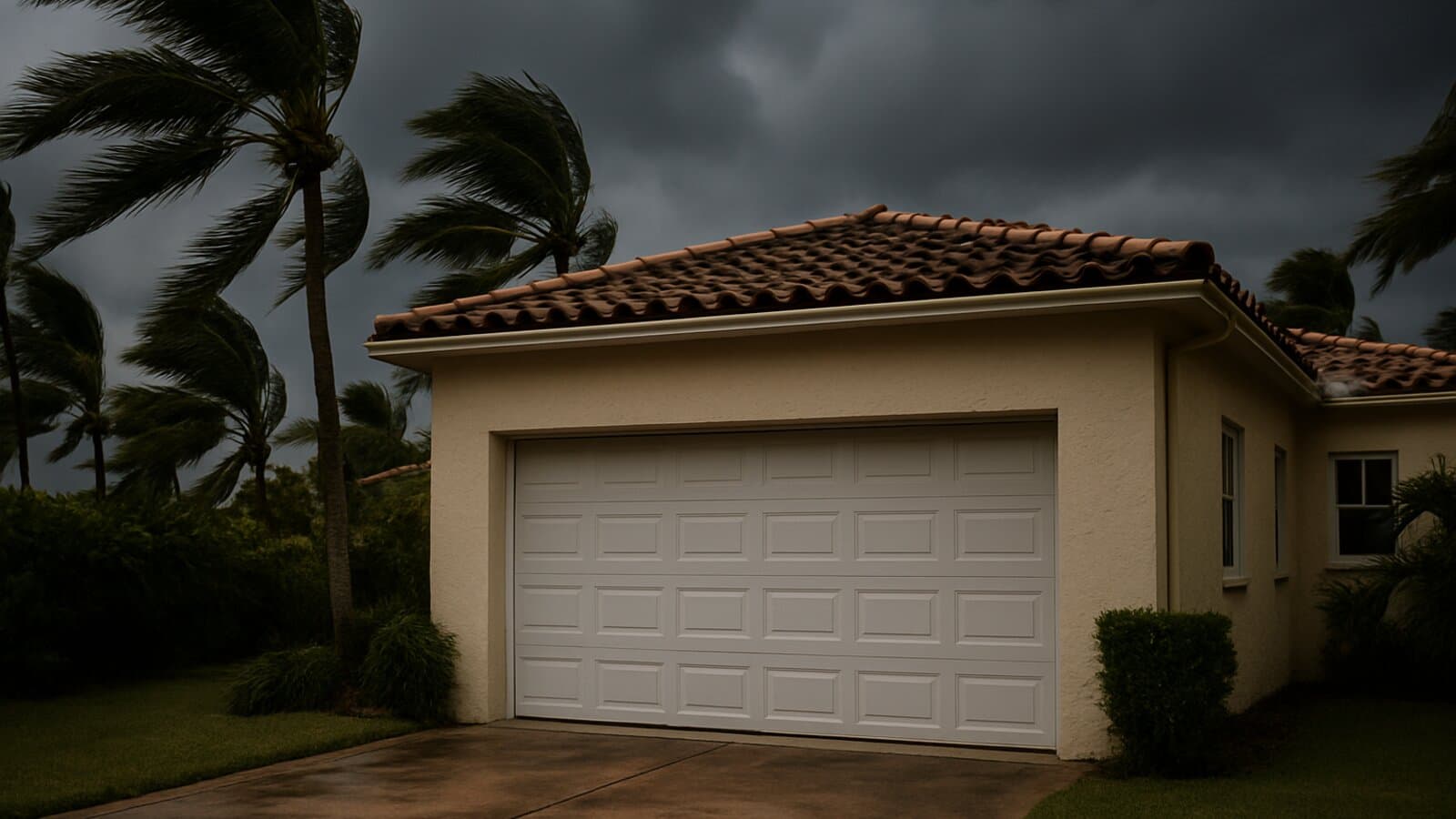
Hurricane season in South Florida doesn't end on the first cool morning, and the garage door is one of the first things worth checking when a storm shows up on the forecast. A solid garage door hurricane prep checklist for Miami homes is a quick job, and most of it needs nothing more than a ladder-free walk around your garage.
This guide is about the practical, do-it-this-weekend side of storm prep: what to look at, what to test, what to leave alone, and when a professional should step in. If you're more interested in how your door affects coverage, our post on garage doors and home insurance in Florida covers that angle.
Why the Garage Door Deserves a Spot on Your Storm List
Your garage door is usually the largest moving opening in the house. In a strong wind event, a door that bends, buckles or pops out of its tracks leaves a big gap in the building envelope, and that is exactly the kind of failure you want to prevent before a storm, not discover after it.
That is why a quick check matters even if your door looks fine from the driveway. Wear that is invisible on a normal day, such as a loose bracket or a frayed cable, is what shows up under stress.
The Garage Door Hurricane Prep Checklist for Miami Homeowners
Work through these steps in order. None of them require taking anything apart.
- Look at the whole door in daylight. Check every panel for dents, cracks, rust streaks or sections that look bowed. Note anything that has changed since last season.
- Check the tracks. They should be straight, firmly bolted to the wall, and free of dents or heavy rust. A bent or loose track is a reason to call, not to hammer it back yourself.
- Inspect hinges and rollers. Look for missing screws, cracked rollers or hinges that have started to pull away from the panel.
- Look at the springs and cables, but don't touch them. Visible gaps, frayed strands or rust on the cables mean it's time for a professional. These parts hold a lot of tension. Our garage door repair team can handle them safely, and you should leave them to a trained technician.
- Run the door through a full cycle. It should move smoothly and quietly, stop where it should, and reverse when it meets an obstruction. Grinding, shaking or hesitation is worth a look before the weather turns.
- Test the safety sensors. Wave an object in front of the eye near the floor while the door is closing. It should reverse.
- Check the weather seal along the bottom. A cracked or flattened seal lets wind-driven rain in. It's an inexpensive part and an easy thing to replace early.
- Look at the wall around the door. Cracks or soft spots in the framing near the tracks can matter as much as the door itself.
Rated Doors, Bracing and What to Ask
Not all garage doors are built for the same wind and debris conditions. In Florida, building products used for wind protection go through a formal approval process, and you can search approved products in the state's Florida Building Code product approval database. Requirements for wind-protection products can differ by county, and South Florida has its own local approval rules, so confirm what applies to your address with your local building department.
If you aren't sure what kind of door you have, look for a label or sticker on the door or its frame and take a photo of it. It will help any technician tell you whether the door is a rated model. Whether your door meets current requirements for your address, and whether it has to be replaced at some point, is a question for your local building department and your installer, not something to guess at.
If you're considering an upgrade, our page on hurricane-rated garage doors explains the options, and we'll tell you honestly if what you have is still serving you well.
What to Do When a Storm Is Actually Approaching
When a named storm is heading your way, keep it simple:
- Close the door and leave it closed. Park inside if you can, then shut it.
- Disconnect the opener only as the manufacturer instructs. Pulling the release cord lets you operate the door by hand, but it also means the door is no longer locked by the opener. Many homeowners lock the door from the inside instead. Follow your opener's manual.
- Unplug the opener if the power may surge or go out. Power returning in a rush can damage electronics.
- Clear the area around the door. Move bins, bikes and loose items that could become projectiles or block the exit.
- Take photos of the door and garage. Dated photos of the condition before the storm may help if you need to file a claim later. Ask your insurer what documentation they want.
Don't attempt last-minute modifications to a door during high wind or after a warning has been issued. Installers can get busy as a storm approaches, which is another reason to do this checklist early in the season.
After the Storm: Safe Steps
Once conditions are safe, look at the door before you use it. If you see bent tracks, a sagging panel, a door that came off its rollers, or a broken spring, stop. Don't force it open or closed.
If the opener is dead because of a power outage, you can usually raise the door by hand using the release cord, but only if the door is balanced and undamaged. If it feels heavy or lopsided, the springs may be damaged and it can drop quickly. In that case, call for emergency garage door repair rather than risking an injury.
Garage Door Hurricane Prep FAQ
Should I leave the garage door open or closed during a storm?
Closed. An open door is a large opening that lets wind and debris into the house. Keep it shut and, if possible, locked.
Can I brace my garage door myself?
Bracing kits exist, but a door and its framing need to suit the kit, and a brace that doesn't suit your door may not do its job. Ask a professional what is appropriate for your specific door and confirm what your building department requires.
Does my garage door need to be hurricane-rated in Miami-Dade?
Requirements can depend on the age of the home, the work being done and the current code. Check with your local building department and your installer for your address.
Is a power outage a problem for my opener?
Not usually. Most openers have a manual release so you can operate the door by hand. If you have a battery backup, test it at the start of the season.
When should I get the door inspected?
Before the peak of the season is ideal, and again any time you notice noise, shaking or uneven movement.
Ready for the Next Storm?
If your checklist turned up something you'd rather not handle on your own, we're happy to take a look. Call (786) 395-4042 or request a free quote for a repair, a tune-up or a new door. At 305 Doors, we'll give you straightforward advice and a clear estimate, and you can browse more local guides on our blog while you're at it.