Garage Door Rust in Miami: What's Cosmetic, What's Not
Garage door rust in Miami: learn where to look, which rust is cosmetic, which is a safety issue, and a simple checklist to slow it down.
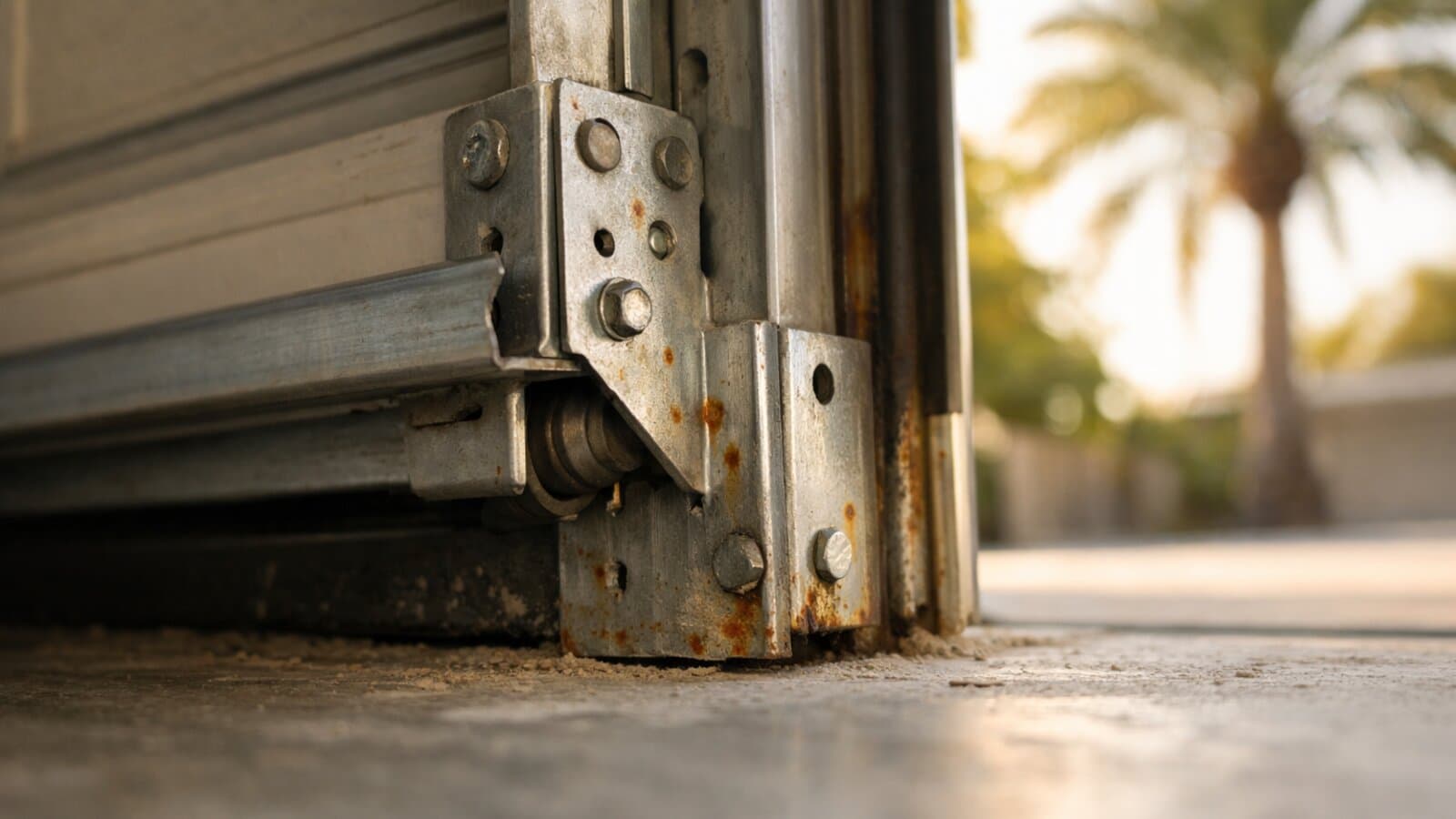
Orange freckles near the bottom corners. A track that squeaks and leaves brown streaks. A hinge that has gone stiff and crusty. If you've noticed garage door rust in Miami, you're not imagining things: warm, wet air, daily humidity and, near the water, a light coating of salt make metal parts age faster than many homeowners expect.
The good news is that rust shows up in stages, and the early ones are easy to deal with. This guide shows you where to look, what you can safely do yourself, and how to tell surface rust from the kind that means a part needs to be replaced.
Why Rust Shows Up Fast on Miami Garage Doors
Rust forms when bare steel meets oxygen and moisture. Miami supplies both almost every day of the year. Sprinklers overspray the bottom panel, afternoon storms blow rain under the door, and humid nights leave a film of condensation on cool metal.
Salt makes it worse. Homes near Biscayne Bay, the ocean and the canals get salty air that settles on hardware and holds moisture against it. You don't have to live on the beach for this to matter, since salt can travel on the wind and inland homes aren't always immune.
Rust doesn't start on the panels first. It usually begins where paint or coating has been scratched or worn: screw heads, hinge edges, track corners, the bottom brackets and rollers, and the spring coils. If you want the bigger picture on how our climate treats doors, our post on why most garage doors in Miami fail so fast explains the combination of heat, moisture and wind.
Where to Look: A Rust Walk-Around
Take a flashlight and spend ten minutes. Start outside, then move inside.
- Bottom edge of each panel. This is where standing water and sprinkler spray collect. Look for bubbling paint or orange stains.
- Bottom corner brackets and rollers. These hold the cables, so they deserve extra attention. Look, but don't loosen anything.
- Hinges and fasteners. Rust here often shows as brown streaks running down the panel.
- Tracks. Surface rust on the vertical track is common. Check the curve and the area near the floor, where water sits.
- Springs and cables. Rust on a torsion or extension spring, or fraying and rust on a cable, is a safety matter, not a cosmetic one.
- Opener rail and mounting hardware. Look for flaking metal on brackets and bolts.
Surface Rust vs. Rust That Needs a Pro
Not all rust is equal. Sorting it into the right group keeps you from either ignoring a problem or paying for a repair you didn't need.
Usually fine to handle yourself
- Light orange dusting on a hinge, track edge or bracket that wipes off with a rag (wipe only; never loosen bolts on the bottom corner brackets, which are under cable tension).
- Small paint bubbles on the bottom of a panel that haven't flaked through to bare metal.
- Stiff but otherwise sound rollers that just need cleaning and the right lubricant.
Call a professional
- Any rust on a spring or cable. These parts hold the door's weight under high tension. Never try to adjust, loosen or replace them yourself.
- Flaking, pitted or thinning metal on hinges, brackets or the bottom panel, where the metal is visibly eaten away.
- Rollers that bind or a door that jerks when it moves, which can mean corrosion is affecting alignment. The U.S. Consumer Product Safety Commission advises that a door that binds or sticks should be serviced by a professional.
- Rust spreading along a seam or the full bottom edge, which can mean the panel is failing.
If any of these sound familiar, a technician can look at the hardware and tell you honestly whether a repair is enough. Our garage door repair team gives honest recommendations and clear communication.
How to Slow Rust Down: A Simple Checklist
You can't stop Miami's weather, but a few habits keep small spots from spreading. Do this every few months, and after major storms.
- Rinse the door and tracks with fresh water, especially after a storm or a windy, salty week near the coast. Use a soft cloth and mild soap, never a pressure washer pointed at seams or hardware.
- Dry the bottom edge and track so water isn't left sitting.
- Wipe light rust gently with a non-metallic pad, then dry the area.
- Touch up scratches with a paint made for metal as soon as you spot them, so bare steel is sealed again.
- Lubricate rollers and hinges with a lubricant meant for garage doors, and wipe off the extra so it doesn't collect dust. Leave the springs to a professional. Check your opener and door manuals for what they recommend.
- Adjust the sprinklers so they don't spray the door every morning.
- Check the bottom seal. A cracked or worn seal lets rain and humidity reach the lowest panel edge.
Our garage door maintenance guide for Miami walks through a fuller seasonal routine if you'd like to build this into a habit.
When Rust Means It's Time to Replace
Repair is often the right call, but not always. Consider replacement when:
- Rust has eaten through more than one panel or the bottom section is separating.
- Several parts, such as hinges, rollers, brackets and track, all show corrosion at once.
- The door is old, and repairs keep coming back every few months.
- You're already planning an upgrade for appearance, insulation or storm protection.
If you're comparing materials, ask about corrosion-resistant finishes and hardware suited to coastal conditions. Our garage door installation service can walk you through options and give you a transparent estimate. If you're also thinking about storm readiness, ask about hurricane-rated options, since corroded hardware can weaken a door.
Garage Door Rust in Miami FAQ
Is surface rust on a garage door dangerous?
Light surface rust on a panel edge or track is usually cosmetic. Rust on springs, cables or load-bearing brackets is different, because those parts carry the door's weight. Have a professional inspect them.
Can I paint over rust on my garage door?
Only after cleaning it. Painting over loose rust traps moisture and the problem returns. Remove loose rust, dry the area and use a paint made for metal, or ask a technician if the panel needs more than a touch-up.
Does living inland protect me from salt air rust?
Partly. Salt is stronger near the water, but humidity, rain and sprinklers still drive rust anywhere in Miami-Dade, so regular rinsing and drying helps everywhere.
What kind of lubricant should I use?
Use a product labeled for garage doors and follow the instructions in your door and opener manuals. Apply it to moving parts only, and wipe off the excess.
How often should I check for rust?
A quick walk-around every few months is a good habit, plus an extra look after hurricane season storms or any week of heavy wind and rain.
Get a Second Set of Eyes on Your Door
If rust is spreading, a spring looks corroded or you simply aren't sure what you're seeing, we're happy to take a look. 305 Doors serves homes and businesses across Miami-Dade County with honest recommendations and transparent estimates. Call (786) 395-4042 or request a free quote through our garage door repair page.