Commercial Roll-Up Door Repair in Miami: Signs and Checks
Need commercial roll-up door repair in Miami? Learn the warning signs, safe routine checks, and when to call a trained technician.
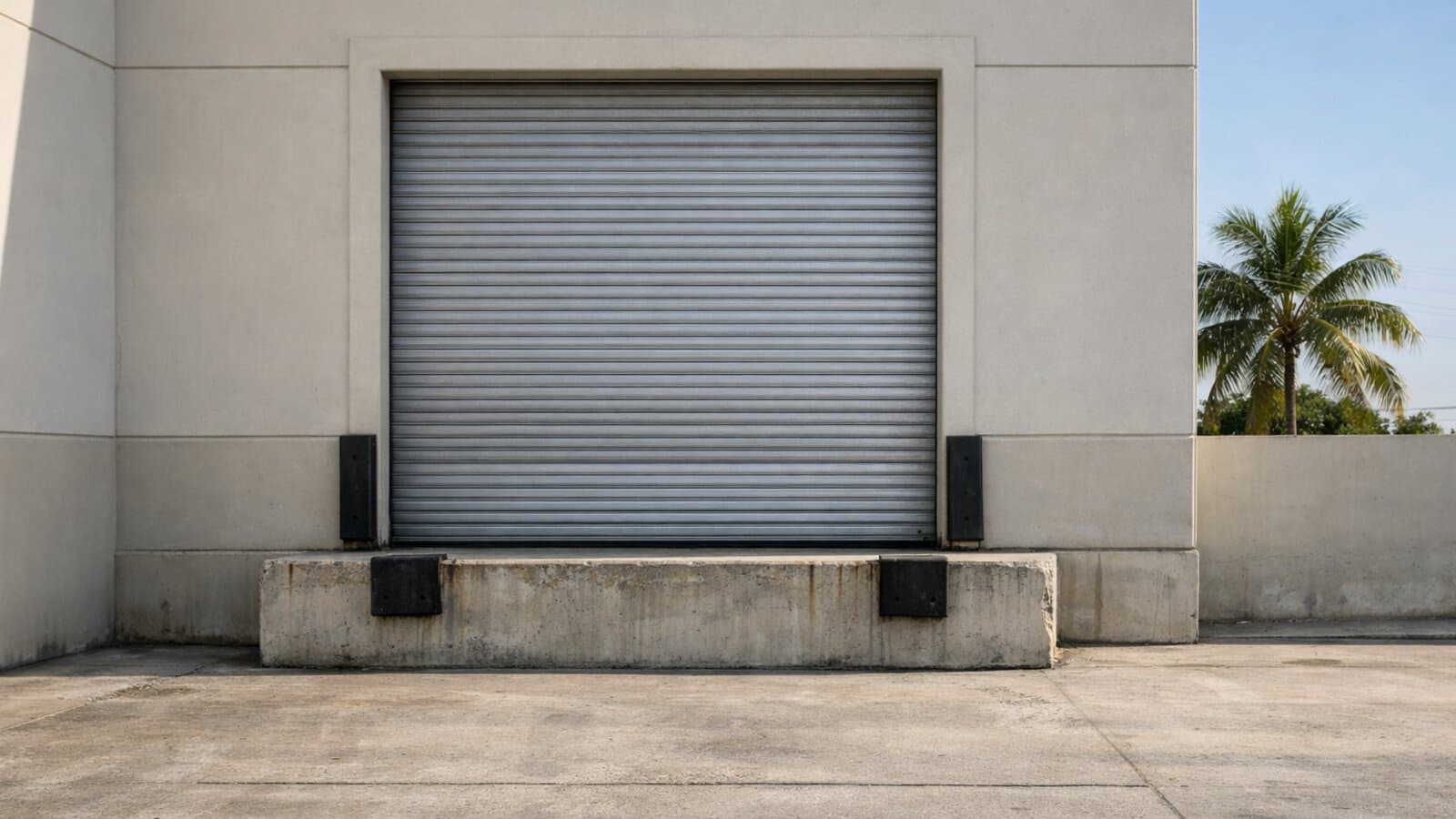
If a roll-up door at your warehouse, shop or loading bay starts grinding, sagging or refusing to stay open, you need a plan before it becomes a day of lost business. This guide covers commercial roll-up door repair in Miami: the warning signs, what a building supervisor can safely check, and when it is time to call a professional.
Roll-up doors look simple, but they work hard. They open and close many times a day, they sit in salt-laden, humid air, and they protect inventory, equipment and people. A small problem ignored for a few weeks usually costs more downtime later.
How Commercial Roll-Up Doors Differ From Residential Garage Doors
A home garage door is made of hinged panels that travel in tracks. A commercial roll-up door is a curtain of interlocking slats that coils around a barrel above the opening. The curtain rides in guides on each side, and a counterbalance spring assembly carries most of the weight.
That design changes what goes wrong. Instead of rollers popping out of a track, you are more likely to see a bent guide, a curtain that rubs, a bottom bar that hangs crooked, or an operator that strains. Springs are still under heavy tension, so the same safety rule applies: leave them to trained technicians. If you also manage a home or rental property, our garage door repair page covers residential doors.
Warning Signs Your Roll-Up Door Needs Repair
Watch for these during your daily walk-through:
- The door will not stay open. If it must be propped open to stay up, the counterbalance probably needs attention.
- Scraping or rubbing. The curtain or slat ends rub against the guides, the hood or the headplate bracket.
- A crooked or sagging curtain. One side of the bottom bar sits lower than the other.
- The operator hums, strains or trips. A motor that labors may be fighting a worn counterbalance rather than failing on its own.
- Dents, bent guides or loose fasteners. Forklifts and delivery trucks are common culprits.
- Rust and seized parts. Coastal humidity and salt speed up corrosion on guides, chains and gears.
- Safety edges or photo-eyes that do not respond. This is a safety problem, not a convenience issue.
What the Industry Recommends for Routine Checks
The Door & Access Systems Manufacturers Association (DASMA) publishes a maintenance sheet for building maintenance supervisors, Technical Data Sheet 270. It is a guideline for spotting common, visible problems, and it says plainly that it does not replace the manufacturer's own maintenance instructions.
Among its points:
- Do not try to adjust the tension wheel; call for service if the spring needs adjusting.
- Call for service if a door has to be propped open, or if the tension wheel or shaft rotates during operation.
- Guide gaps should be even from top to bottom, and bent guides must not bind the curtain or bottom bar.
- Evaluate electric doors quarterly, and test the door's sensing devices at least weekly.
Use it as a checklist for your own staff, and let a trained technician handle anything involving springs, brackets or operator limits.
Commercial Roll-Up Door Repair Miami: A Practical Checklist
Here is a simple routine your team can follow without touching anything under tension:
- Look at the whole door. Open and close it once and watch for crooked movement, rubbing or odd noises.
- Check the guides and fasteners. Look for dents, gaps that change from top to bottom, and loose or missing hardware.
- Check the bottom bar and edge. Make sure it lands evenly and any sensing edge responds.
- Test the sensing devices. Test them at least weekly, checking both ends of any sensing edge, and note the date.
- Keep the opening clear. Move pallets, carts and debris out of the door's path.
- Clean off salt, dust and grime from visible parts with a dry or lightly damp cloth, and look for rust.
- Write it down. Keep a short log of issues, dates and who reported them. It helps a technician diagnose faster.
- Stop and call a professional if anything looks bent, loose, frayed or under strain.
Repair or Replace?
Many roll-up door problems are repairable: worn guides, damaged slats, a bent bottom bar, a tired operator or a spring assembly that needs service. Replacement makes more sense when the curtain is badly damaged, corrosion has spread, or repeated repairs keep adding up while the door still fails.
An honest technician will explain which parts are worn, what is worth fixing and what is not, and give you a clear estimate before work begins. Our commercial garage doors page lists the roll-ups, doors and gates we work on.
After a Storm or a Vehicle Strike
Wind, flying debris and flooding can bend guides or loosen hardware you cannot see from the floor. After a storm, look carefully before normal use resumes: a door that was hit by wind or a vehicle may fail on its next cycle. Take the door out of service if it is damaged, and have it inspected before normal use resumes.
If you are getting ready for hurricane season, our hurricane prep checklist walks through what to inspect first. If the damage leaves your building open or unsecured, emergency garage door repair is the right call.
When to Call a Professional
Call a trained technician if you notice:
- A spring, cable, bracket or tension wheel that looks damaged or moves when it should not
- A curtain that has left its guides or will not roll evenly
- A door that will not stay open or closed
- An operator that strains, trips or ignores its limits
- Any safety edge or photo-eye that does not work
Do not stand under a failing door, and do not attempt spring adjustments yourself.
Commercial Roll-Up Door Repair Miami FAQ
How often should a commercial roll-up door be serviced?
Follow the door manufacturer's schedule. DASMA's sheet for building maintenance supervisors recommends evaluating electric doors quarterly and testing sensing devices at least weekly, and says to call a trained service provider when a problem shows up.
Can my maintenance staff fix a roll-up door?
They can do visual checks, keep the opening clear and report problems. Springs, brackets and operator limits should be left to trained technicians.
Why does my roll-up door keep rubbing on one side?
Uneven rubbing often points to a bent guide, loose fasteners or a crooked bottom bar. Stop using the door if the curtain is binding and have it inspected.
Is a stuck door an emergency?
If it leaves your building open or unsecured, treat it as urgent. Our emergency repair service offers 24-hour response.
Do you serve my area?
We work across Miami-Dade County, including businesses in places like Doral.
Need a Roll-Up Door Repaired?
If a door at your business is dragging, sagging or unsafe, 305 Doors can take a look and give you a clear, transparent estimate. Visit our commercial garage doors page to get a free quote, or call (786) 395-4042.