Garage Door Opener Replacement in Miami: Signs and Safety
Is it time for garage door opener replacement in Miami? Learn the warning signs, what to check first, and the safety features to look for.
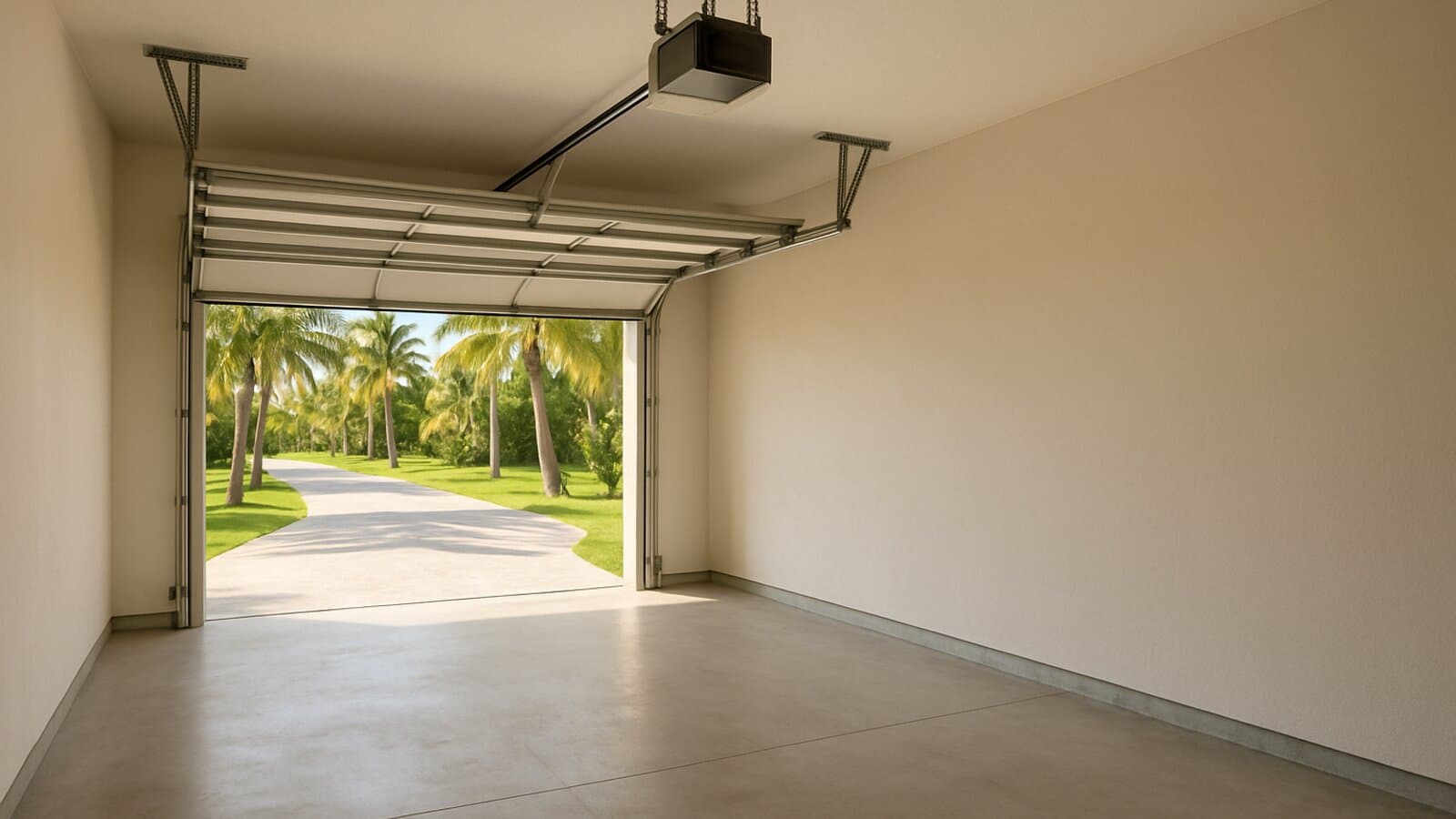
Your garage door opener is the part you touch every single day, which is exactly why it's easy to ignore until the remote stops answering on a rainy morning. If you're wondering whether it's time for garage door opener replacement in Miami, the answer usually comes down to a few clear signs, not a single dramatic failure.
This guide walks through how to tell a fixable opener from one that has reached the end of the road, what to check first, what to ask before you buy, and why safety features matter more than any extra feature on the box.
Signs You're Ready for Garage Door Opener Replacement in Miami
Not every glitch means a new motor. Here are the signs that point toward replacing the opener instead of nursing it along:
- It's older and no longer reverses reliably. An opener that doesn't back off when the door meets an obstruction is a safety problem, not an inconvenience.
- Repairs keep coming. If you've had the logic board, gear or remote receiver looked at more than once, the next repair is probably not the last.
- It's loud, jerky or slow. Grinding, shaking or a motor that strains to lift the door suggests worn internal parts.
- The remotes and keypad act up. Short range, delayed response or random failures often trace back to an aging receiver.
- Corrosion is visible. Salt air and humidity are hard on motor housings, wiring and the wall button. Humidity and salt air are tough on Miami garage hardware.
- It can't be paired with what you want. If you'd like phone control or a battery backup and your current unit can't do it, replacement may be the practical route.
Check These Things Before You Replace the Opener
Plenty of "dead opener" calls turn out to be something simpler. Spend ten minutes on this list first:
- Check power. Make sure the unit is plugged in, the outlet works and no breaker has tripped. After a storm or outage, this is a good place to start.
- Look at the safety sensors. The two small eyes near the floor must be clean, aligned and unblocked. A misaligned sensor can make a door refuse to close.
- Try a fresh remote battery. It sounds obvious, and it solves a surprising number of problems.
- Disconnect the door and lift it by hand. Pull the release cord with the door closed, then raise and lower it manually. If it feels heavy, binds or doesn't stay put when stopped halfway, the problem is likely the door's springs or tracks, not the opener, and a new opener won't fix it.
- Listen for the motor. If it hums or clicks but the door doesn't move, the opener may be working while something in the door is not.
That fourth step is the one most people skip. An opener is designed to guide a door that is already balanced by its springs, not to lift the full weight on its own. If the door itself is the issue, start with garage door repair instead of buying a motor.
Safety Comes First When You Replace an Opener
The U.S. Consumer Product Safety Commission is direct about this: openers that don't automatically reverse are a hazard, and homeowners with older units should repair or replace them with reversing openers that meet the federal safety standard. According to the CPSC, openers made or imported for sale in the United States after January 1, 1991 must have reversing systems, and an external entrapment protection system, such as an electric eye or a door edge sensor, was added as a requirement in 1993. If an electric eye is used, the CPSC says it should be installed 4 to 6 inches above the floor.
The CPSC also recommends testing the reverse function (its notice describes laying a 2x4 on the floor in the door's path) and inspecting the door and opener every 30 days. You can read its guidance in its notice on non-reversing garage door openers, including the reversal test and how to check door balance. Follow the instructions in your owner's manual for the test, and if the door doesn't reverse, stop using the opener until it's adjusted, repaired or replaced.
What to Look For in a Replacement Opener
Once you've decided to replace, these are the choices that actually matter:
- Drive type. Chain, belt and screw drives each trade off noise, upkeep and cost. Belt drives tend to run quieter, which matters if a bedroom shares a wall with the garage. A technician can tell you which suits your door.
- Motor strength for your door. A heavy insulated or wind-rated door needs an opener matched to its weight. Under-sizing leads to early wear.
- Battery backup. In a Miami summer, power outages are a real possibility. Backup lets you open and close the door without hunting for the release cord in the dark.
- Smart features. Phone control, activity alerts and integration with a home system are convenient. If this appeals to you, our guide to smart garage doors for Miami homeowners goes deeper.
- Safety and compatibility. Make sure the opener includes the reversing and sensor features described above, and that the new remotes and keypad are easy to program.
Ask for the estimate to spell out exactly what's included: the opener, rail, wiring, sensors, remotes and installation. A clear estimate lets you compare options before work starts.
Opener Replacement for Hurricane Season
Storm season adds a few things to think about. If you have a hurricane-rated door, the opener still needs to be matched to its weight, and you'll want to know how to operate the door manually if the power goes out. Our hurricane-rated garage doors page covers the options, our hurricane prep checklist covers what to do before a storm, and an installer can show you how to disengage the opener before a storm so you're never stuck.
Should You Install a New Opener Yourself?
Mounting an opener involves a ladder, ceiling and header work, wiring and calibration of travel limits and force. Mistakes in those settings can leave the door unsafe, and a door that's out of balance can strike someone. If anything about the springs, cables or tracks looks off, leave it to a trained technician. If you'd like new equipment installed and adjusted properly, our team handles opener replacement and setup.
Garage Door Opener Replacement Miami FAQ
How long does a garage door opener last?
It depends on the model, how often you use the door and the climate. In coastal South Florida, humidity and salt air can wear out electronics and housings sooner. Rather than counting years, watch for the signs listed above.
Can I keep my old door and just replace the opener?
Often yes, as long as the door is in good shape, balanced and fitted with working springs, cables and tracks. A technician can confirm that before installing a new unit.
Will a new opener fix a door that's hard to lift by hand?
No. A door that's heavy when disconnected usually has a spring or hardware problem. Fix that first, or the new opener will wear out quickly.
Do I need a battery backup?
You don't need one, but it's worth considering in Miami, where outages during storms are common. It lets the opener work for a while without power.
Is it safe to test my opener myself?
Inspecting the door and opener and testing the reverse function, as the CPSC describes, are checks homeowners can do. Follow your owner's manual and the CPSC guidance, and call a professional for anything involving springs or cables.
Get a Free Quote for Your New Opener
If your opener is failing, noisy or outdated, 305 Doors can look at the whole system, tell you honestly whether you need a new unit or a different repair, and explain the options in plain terms. Request a free quote through our garage door opener page or call (786) 395-4042. You can also browse more advice on our blog.